Museum

Museums & Cultural Services

Visitor Experience Survey

Museum Sites

Fort Erie Museums preserve local history with exhibits that connect you to the people and stories that shaped the community. Cultural Services supports events and programs that strengthen Fort Erie’s identity. You can explore heritage sites, engaging exhibits and learning opportunities that bring Fort Erie’s past to life.

Heritage Plaques

Heritage plaques in Fort Erie recognize places and stories that shaped the community. They mark buildings, landscapes and events with cultural significance. Each plaque helps you understand local history with clear facts and context. These markers protect collective memory and support learning for residents, students and visitors.

Museum Programs

Museum programs in Fort Erie give you hands-on ways to explore local history. You can join workshops, tours and seasonal activities that highlight artifacts, stories and research. These programs support learning for all ages. They build understanding of the community’s past and strengthen connections to the people and events that shaped it.

Social Media - History Trivia

Test your knowledge about Fort Erie’s diverse history

Visit the Town Facebook or Instagram to see all of the History Trivia posts. 

Question: In January 1970 the Town of Fort Erie held its first council meeting as a newly formed municipality. What was the name of the township that amalgamated with the Town of Fort Erie and the Village of Crystal Beach? Hint: this building was the town hall.

Answer: Bertie Township. The township was formally incorporated in 1850 and by 1931 comprised of Ridgeway, Stevensville, Point Abino, Snyder, Windmill Point, Erie Beach, Mulgrave, Ridgemount and Shipyards. In 1970, the Township was amalgamated with the Town of Fort Erie and the Village of Crystal Beach.

Question: March 1 marks 50 years since the start of what natural disaster which caused Mayor Teal to declare the Town of Fort Erie a disaster area by March 3? Do you remember?

Answer: The great ice storm of 1976 began on March 1 and lasted for two days. 5,000 of the 11,000 homes were left without electricity as the storm tore down power lines. It closed stores, factories, schools and the water and sewage treatment plants. One official from Canadian Niagara Power said, “The wires look like great masses of spaghetti.”


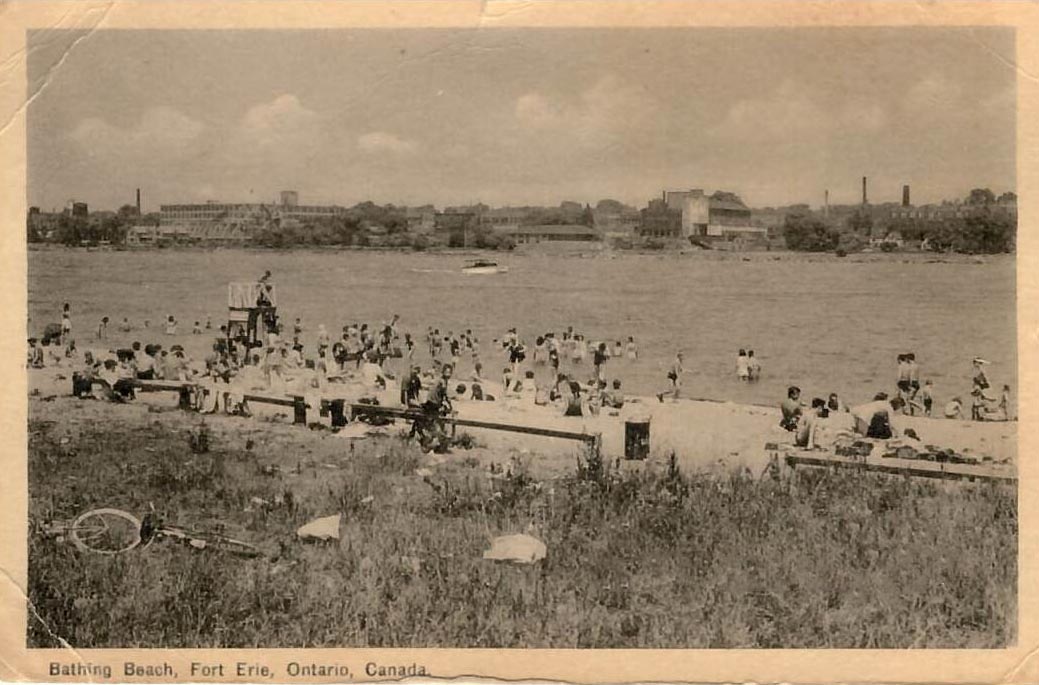
A beach with people swimming


Question: What was the name of the beach seen in this picture? Hint: it was located on the Niagara River north of the Peace Bridge. Bonus question: what business was originally located here?

Answer: The photo shows “Baby Hole” c. 1938 when it was maintained by the Kinsmen. This was a popular swimming spot for many locals. “Baby Hole” was located at the former location of the Horton Steelworks Shipyard at the foot of Princess Street. It is currently part of the Fort Erie Riverwalk which opened in 2003.

Question: 

When proprietor John Kieffer began Coca-Cola Bottling Works in 1913, where was the plant originally located? This photo shows the plant when it was moved to Garrison Road sometime after it was renamed Northern Springs.

Bonus question: Can you name some of the sodas that were made there?

John and his son delivered soda by horse and wagon to hotels and stores in the surrounding communities. This was later done by truck.

Answer: 

The Coca-Cola plant was originally located in Ridgeway on Rebstock Road between Ridge and Prospect Point Roads. It produced Coca-Cola, Ginger Ale, Cream Soda, and Raspberry soda pop.

When the business was sold to Harry Murdock, it was relocated to the northwest corner of Garrison and Rose Hill Roads, where Rosehill Auction is currently located.  

Question: 

One of the oldest businesses in Crystal Beach, seen here, began in 1876. What type of business was it and what was its name? 

Answer: 

The Crystal Beach Planing Mill, operated by Charles Herbert Haun, opened in 1876. It was initially run by steam power, then changed to electricity when power came to Crystal Beach. In its early years it did sawmill work as well as planing. 

The building where the mill used to operate still stands today and is located on the northeast corner of Rebstock Road and Elmwood Avenue. 

Question: 

During the Prohibition years of the 1920s, there was an active “rum-running” business between Fort Erie and Buffalo.

What was the incident that occurred 100 years ago on June 28, 1926, off the coast of Point Abino, between Canadian rum-runners and the American Coast Guard?

Answer: 

As soon as Prohibition became law in 1920 thousands of would-be “rum-runners” traversed the Great Lakes, packed to the gunwales with booze supposedly bound for Cuba or Mexico. The U.S. Coast Guard watched closely for the darkened, high-speed Canadian boats and by 1926, a full-scale war was underway on Lake Erie.

On the evening of June 28, 1926, Canadian rum-runners were waiting off Point Abino in an unmarked boat full of whisky destined for the New York Central Railway’s number one shed in Buffalo.

When spotted by the coast guard, the black ship was believed to be in American waters and shots were fired. Both ships became breached on the Canadian shore.

The Canadian captain rushed to a farmhouse to call the customs officer before returning to where the American coast guard boat had been breached. Armed with a pistol and a dozen angry local farmers accompanying him, he held the Americans captive until Canadian customs officers arrived and accompanied the coast guard men to safety.

Meanwhile, the Canadian smuggler’s boat was unloaded by “monks” (men hired to load and unload the black boats) and the whisky was hidden safely away.

More information about this event and other stories of rum-running and Prohibition can be found in “Many Voices II: A Collective History of Greater Fort Erie”, available for purchase at the Fort Erie Historical Museum.

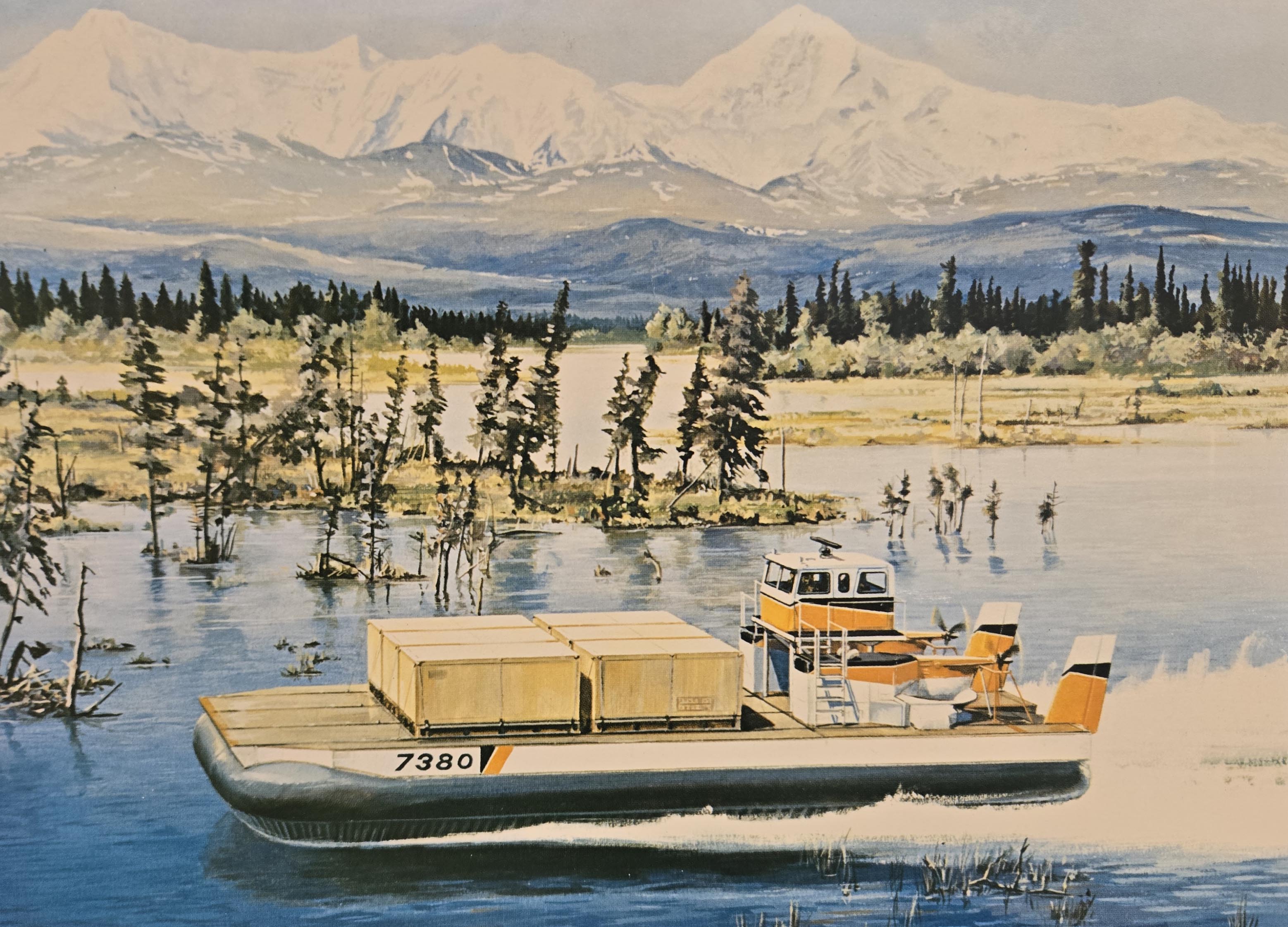
hoverboat

Question: 

In what year did Fleet start production on the Bell Voyageur hovercraft?

Bonus: At Fleet, this vehicle was known by what other name?

Answer: 

1971

Bell Aerospace Canada designed the Bell Voyageur hovercraft, also known as the Bell Barge at Fleet. Its main structure was built at Fleet and then returned to Bell’s facility in Grand Bend for assembly. The Voyageur was designed for military and commercial use over rugged and varied terrain including mud, marshlands, tundra, ice, and water.

Sign up to our Newsletter

Sign up to receive information from the Town of Fort Erie directly to your inbox. Check out the various categories of general news, and emergency notifications.