
Ringing the Anvil on early Buffalo Radio
There is so much to discover in these photographs and advertisements from the early days of radio. Together, they connect local entertainment, blacksmithing, radio broadcasting, and Fort Erie promotion. The images and ads were created for The Village Blacksmith Shop, a program broadcast on WGR in Buffalo. The stars of the show were Winger’s Crescent Park Entertainers, a local musical group led by Sam Anger.
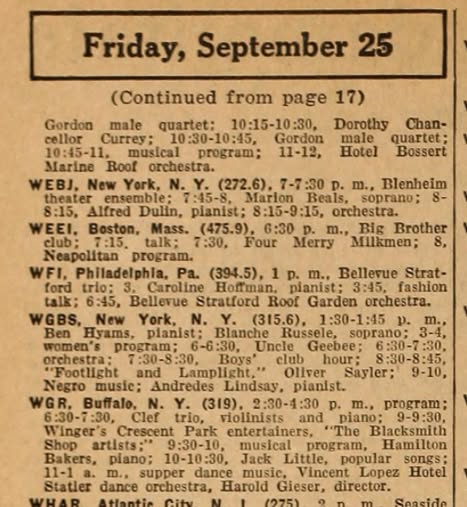
The program aired in the 1920s on Friday evenings and famously opened with the ringing sound of an anvil. Anger was a local blacksmith by vocation. An 1891 directory lists him on Buffalo Road, and by the 1920s, he had established himself in Ridgeway, balancing his trade at the forge with musical performances in Buffalo.
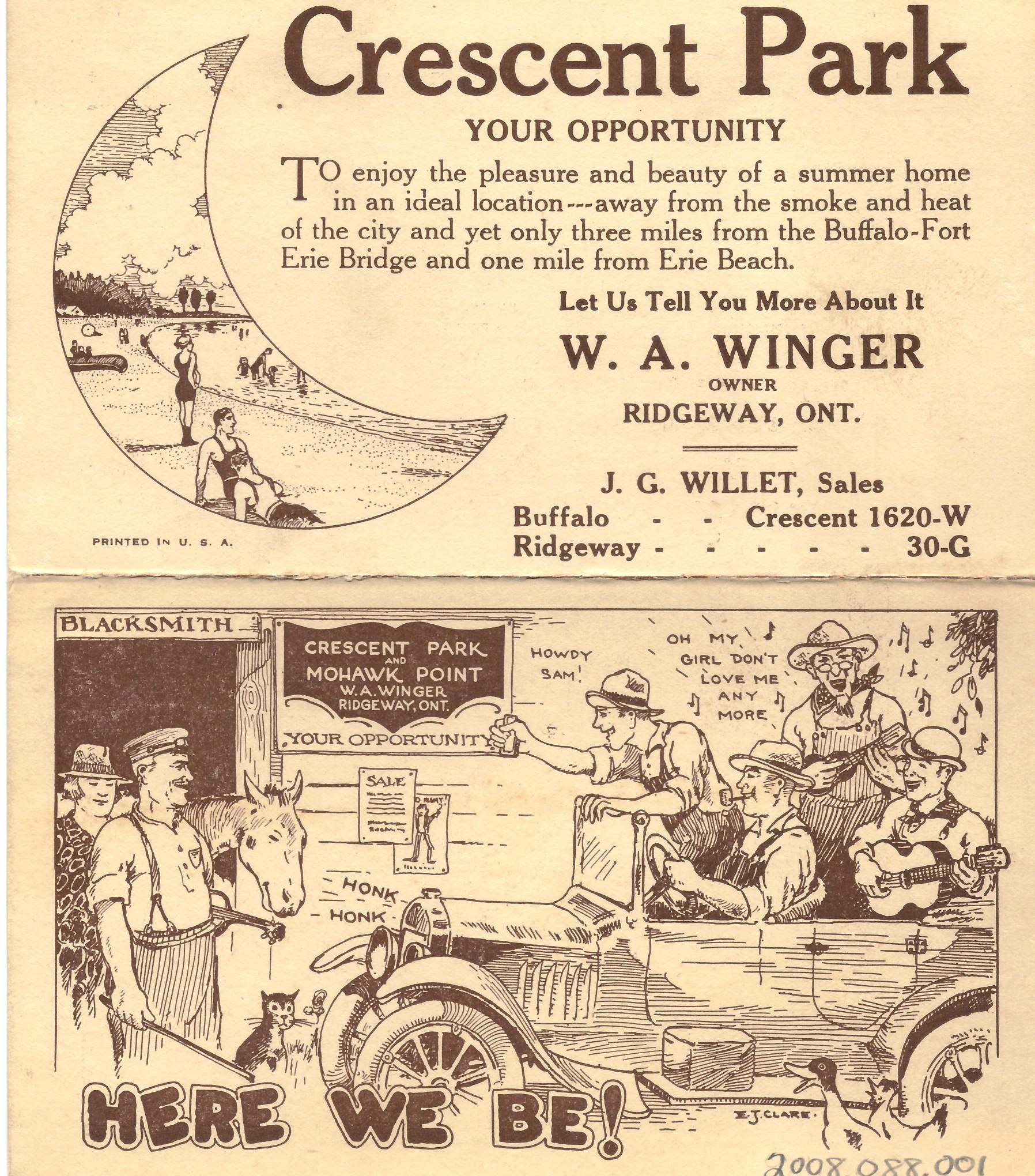
The first image is a promotional card. One side advertises the band and lists its members: Sam Anger, Mrs. Sam Anger, Hugo Lautz, J. G. Willet, Ernie Clare, and Howard Brandel, along with sponsor W. A. Winger. Winger’s support of the program was intended to draw attention to his Crescent Park development and encourage investment in Fort Erie, a goal reflected on the reverse side of the card. The advertisement also features a striking illustration that highlights both the band and its connection to the development. Crescent Park was tied to the construction of the Peace Bridge, which many predicted would lead to rapid population growth in Fort Erie. That boom did not materialize as expected, as the Great Depression curtailed many new home purchases in this and other developments until later.
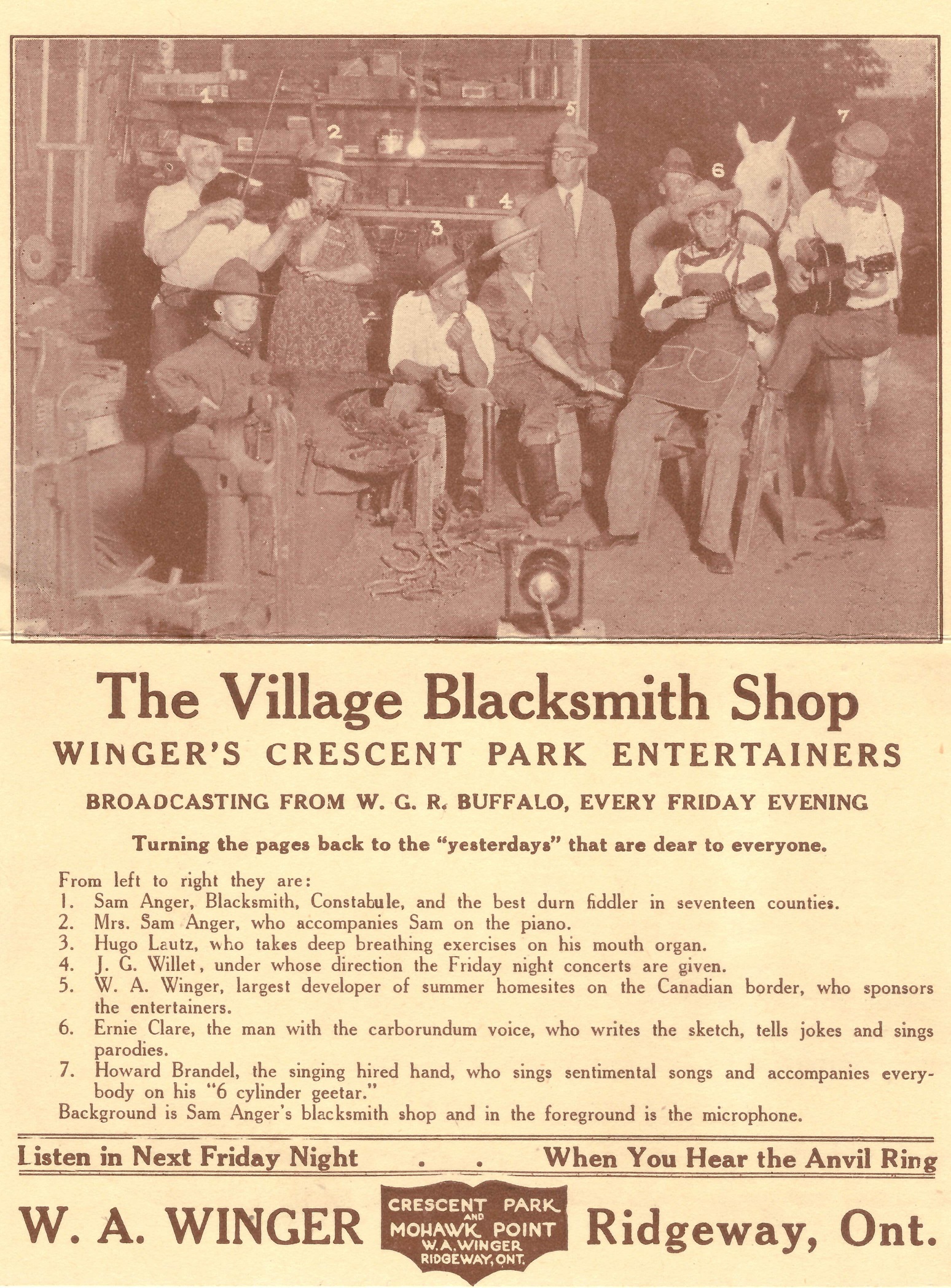
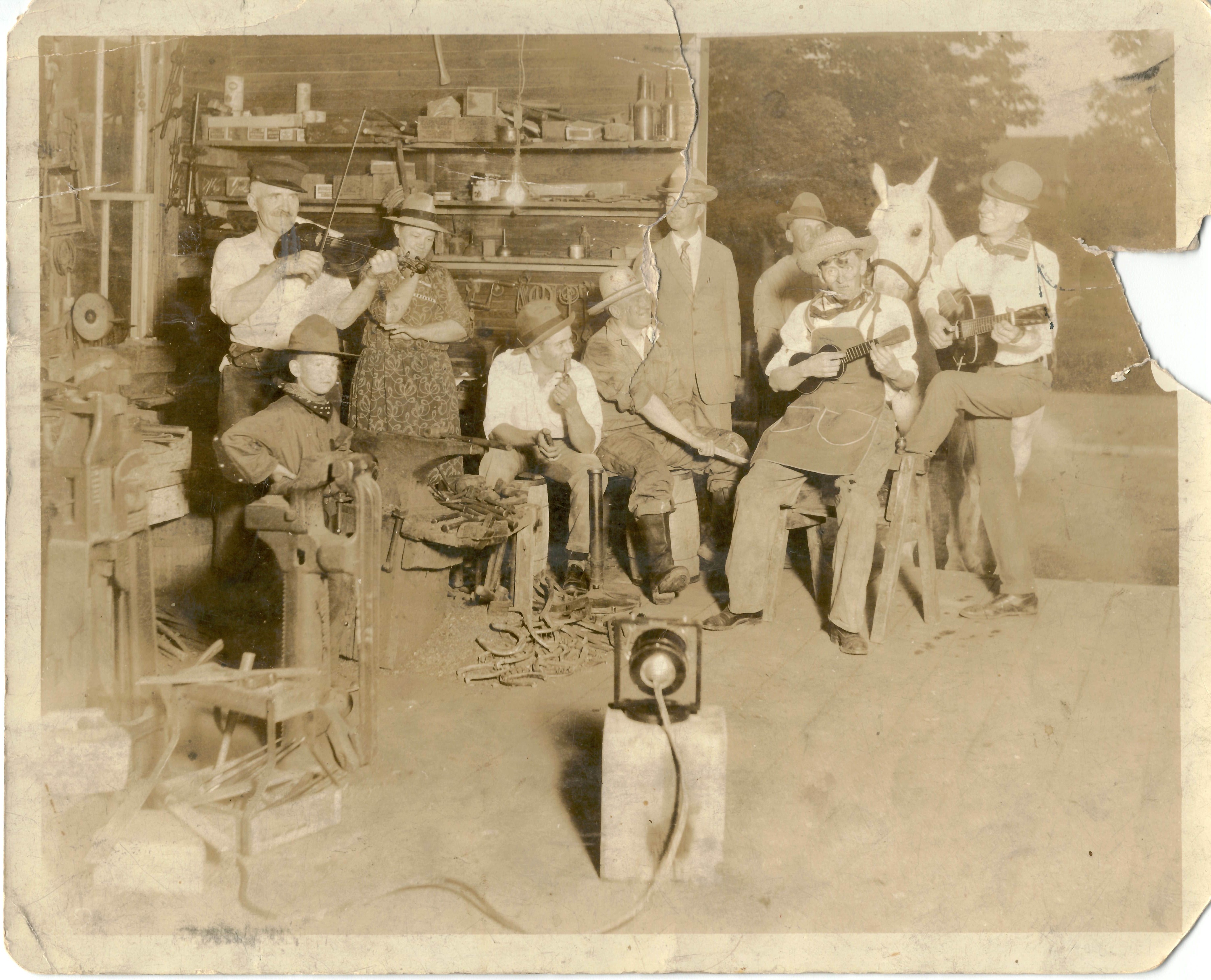
The next photograph is the original studio image of the musicians gathered inside the blacksmith shop, complete with a microphone positioned in front of the group. The photograph was taken by Woolever's of Crystal Beach and offers a remarkable glimpse into the setting that inspired the radio program.
A second promotional advertisement follows, similar in design but featuring a different pose and an expanded lineup. This version includes Red Tubbs, George Marshall, Miss Millie Downs, and Garnet Jansen among the performers.
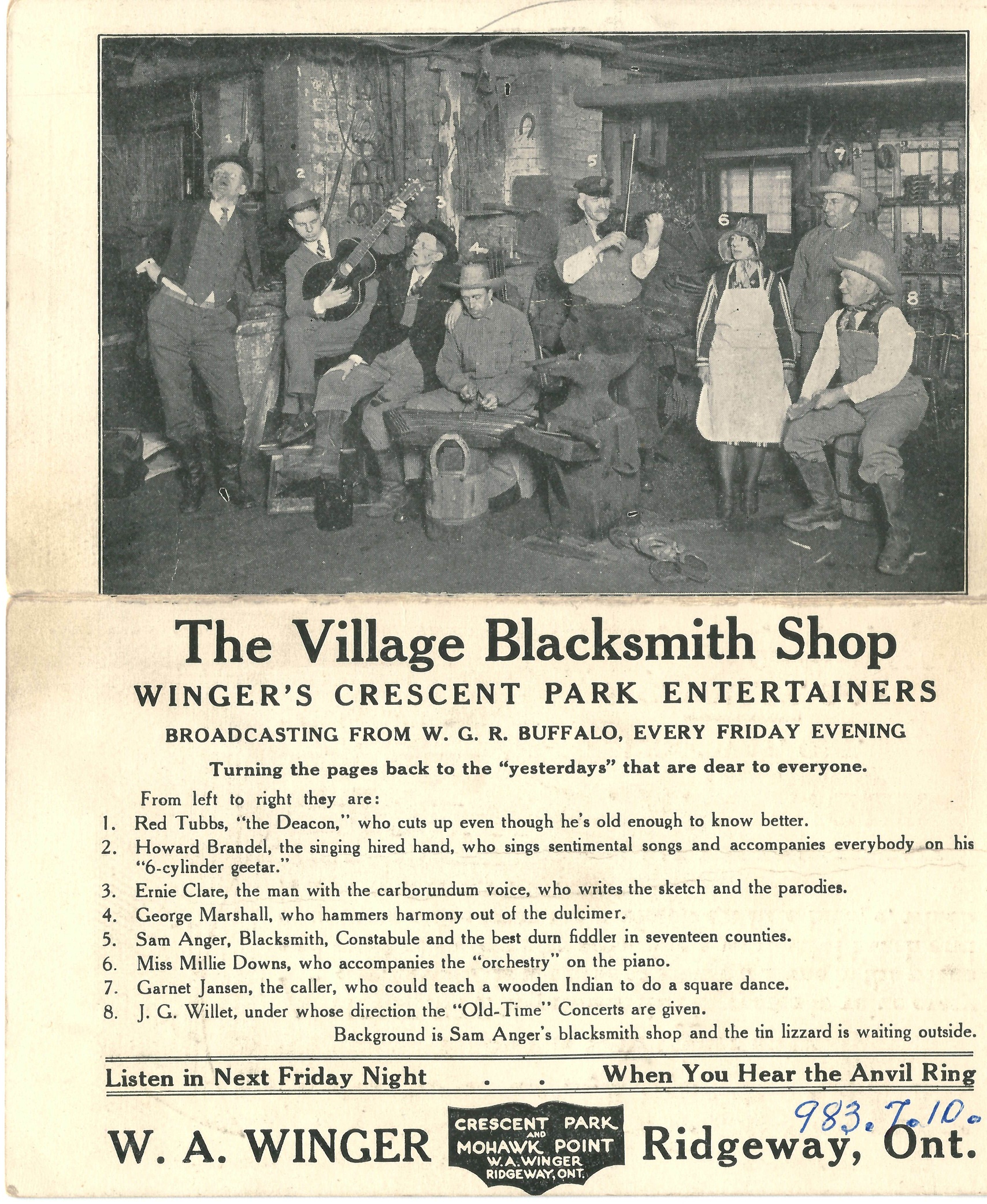
This was a time in music history when what was then commonly marketed as “hillbilly” music was expanding, and this local group no doubt fit that genre. The advertisements include some wonderful descriptions of the musicians, with phrases such as “the man with the carborundum voice”, “6-cylinder geetar”, and “the best durn fiddler in seventeen counties.”
Placing a “hillbilly” act on a Friday night reflected a broader radio trend across North America. The Grand Ole Opry began in 1925, and radio was helping connect rural performers and communities to wider listening audiences. Local stations often relied on regional musicians, sponsored programming, and weekend “barn dance” formats to build loyal audiences. It is likely that The Village Blacksmith Shop was part of this same movement. Music historians have drawn a direct line between these early broadcasts and the development of contemporary country and western music.
Beyond documenting the musicians themselves, these photographs provide an invaluable window into the blacksmithing trade, the early days of radio broadcasting, and the vibrant entertainment scene of Fort Erie and Ridgeway during the first half of the twentieth century. The ringing anvil, the radio microphone, and the promotional images together capture a moment when traditional trades, new technology, and local ambition all sounded on the same stage.
Sign up to our Newsletter
Sign up to receive information from the Town of Fort Erie directly to your inbox. Check out the various categories of general news, and emergency notifications.