
Collard Family Budget: More Than Numbers
A notebook filled with numbers may not seem exciting, but it can tell us a great deal about the past. In this case, one family ledger helps us understand everyday life in Ridgeway in the years leading up to the Great Depression. A photograph, a census record, or a receipt may look simple on its own, but when studied together, they can reveal how a family lived, worked, and changed over time. The Collard family ledger in the Museum collection is one such example.
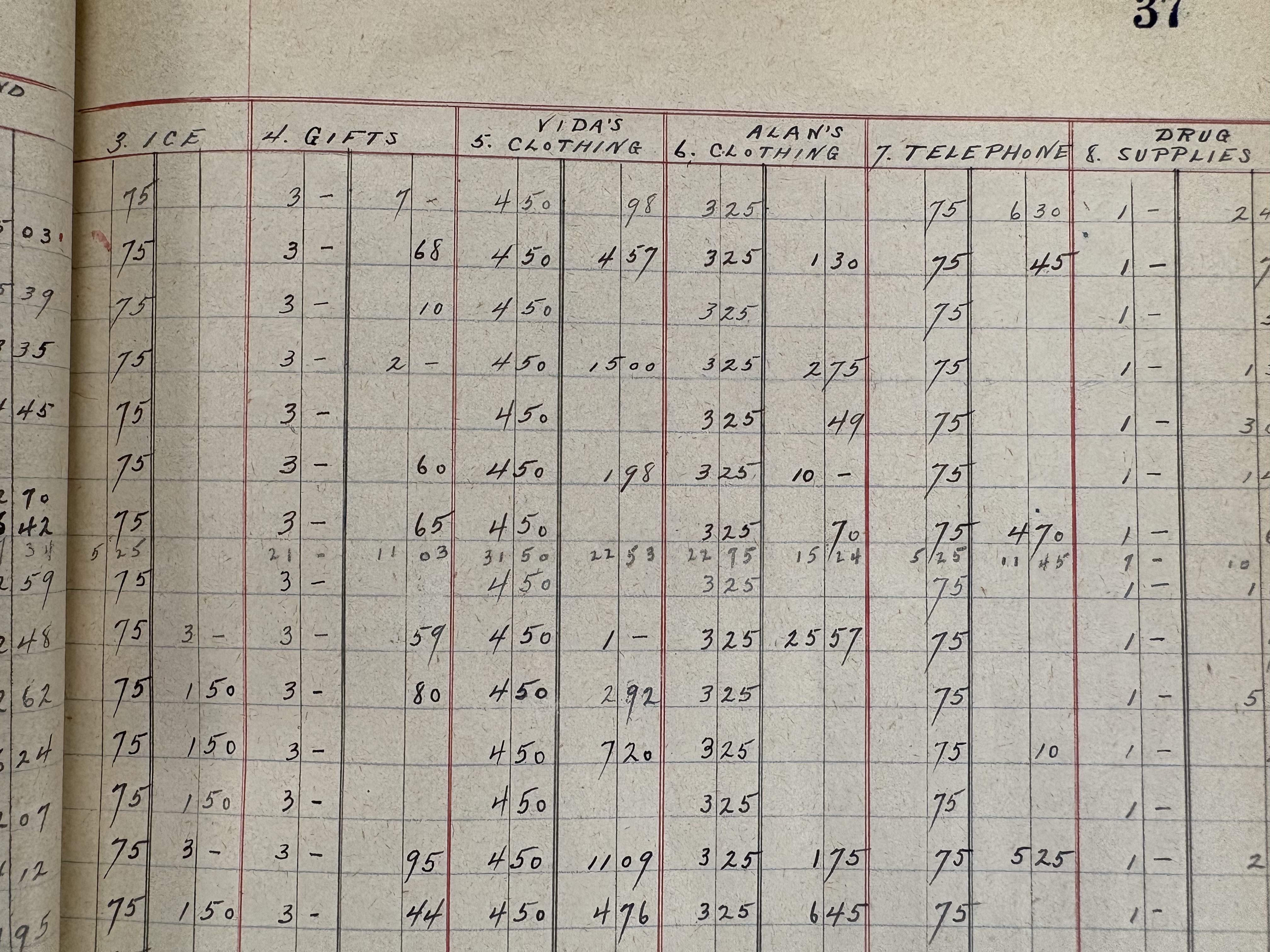
At first glance, this ledger is a list of income and expenses – rent, heat, light, clothing, magazines, society dues, house supplies, church, food, etc. Yet it provides us with valuable insights into the household of Allan and Vida Collard in the late 1920s and early 1930s.
Exploring the five-year period between 1926 and 1931 shows important changes in the Collard household. Income rose during those years, and later research suggests that Allan Collard changed jobs sometime during this period, shifting from banking to insurance. At the same time, the household became more complex. By 1931, there were children in the home, and the ledger also includes spending for “help”, suggesting the family may have hired a domestic at some point, perhaps to assist Vida with childcare or housework. New expenses also suggest a more modern way of life and upward mobility. Costs associated with a car, telephone, literature, and recreation show that new forms of technology, mobility, and leisure were becoming more accessible to middle class households in Ridgeway. Utility costs also increased, which fits with a household using more services and living in a more connected world.
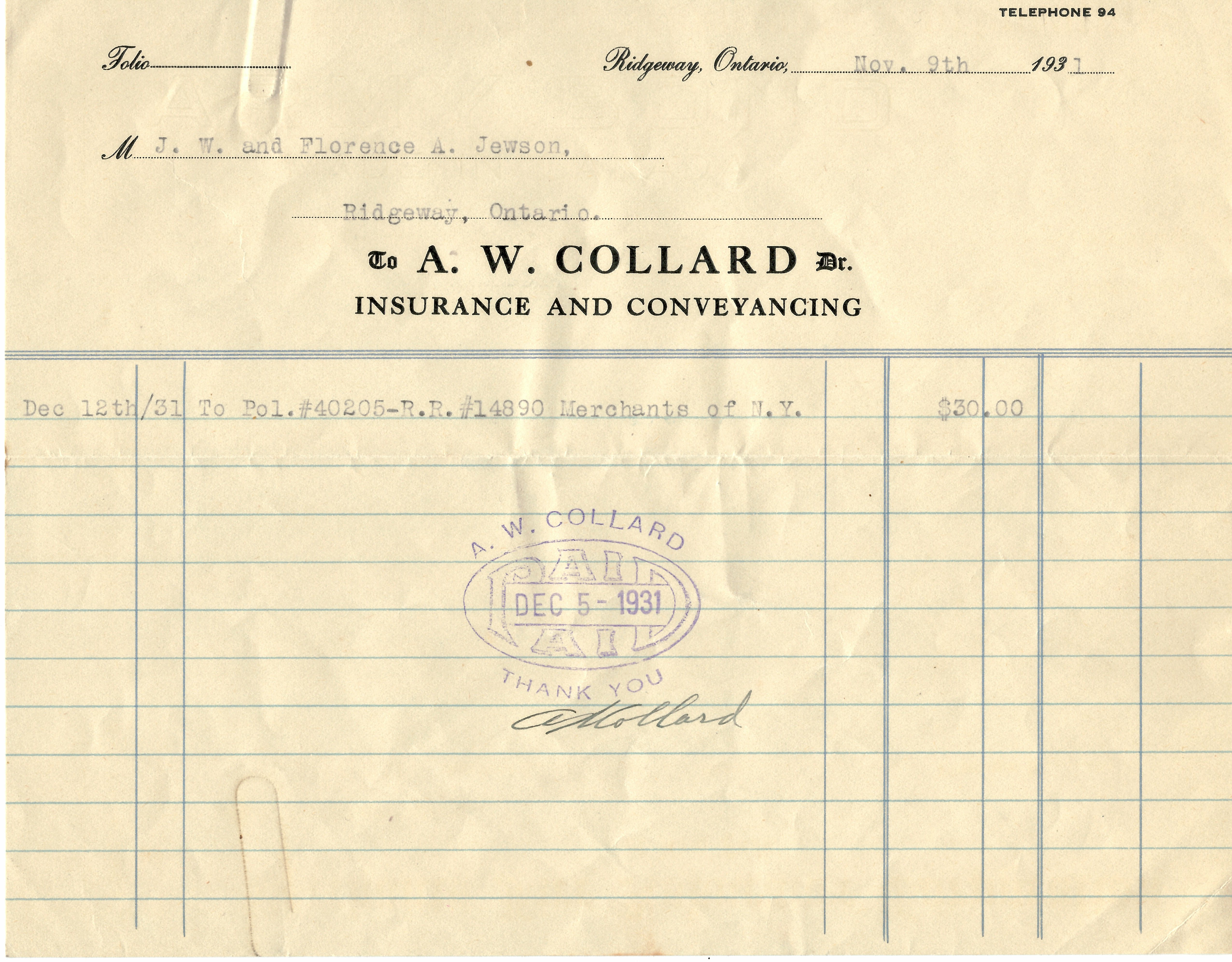
Some of the most interesting details come from looking closely at spending patterns. Allan’s clothing took up a larger share of the budget in 1931 than it had in 1926. This may reflect the expectations of his newer role, where appearance may have mattered more, but it may also reflect an increase in salary and hence more disposable income.
The ledger also shows that church remained a major part of family life. In both years, church spending made up about 8 to 10 percent of household expenses, a considerable share, which suggests that faith, community, and regular giving were important to the Collards. Other research and records in the museum collection help us fill in these details.
Census records identify Allan as a life insurance agent by 1931 and show that Allan and Vida were living with their young children, Kathryn and David, in a six-room wooden house. Photographs and family connections also place them within local business, church, and community networks. Taken together, these records show how a simple family ledger can do much more than list numbers. It helps us to reconstruct a story of work, faith, family, and modern life in Ridgeway during a time of growing uncertainty.
Sign up to our Newsletter
Sign up to receive information from the Town of Fort Erie directly to your inbox. Check out the various categories of general news, and emergency notifications.